AFRICAN STORIES

OUR HISTORY

Thoughts for African Stories

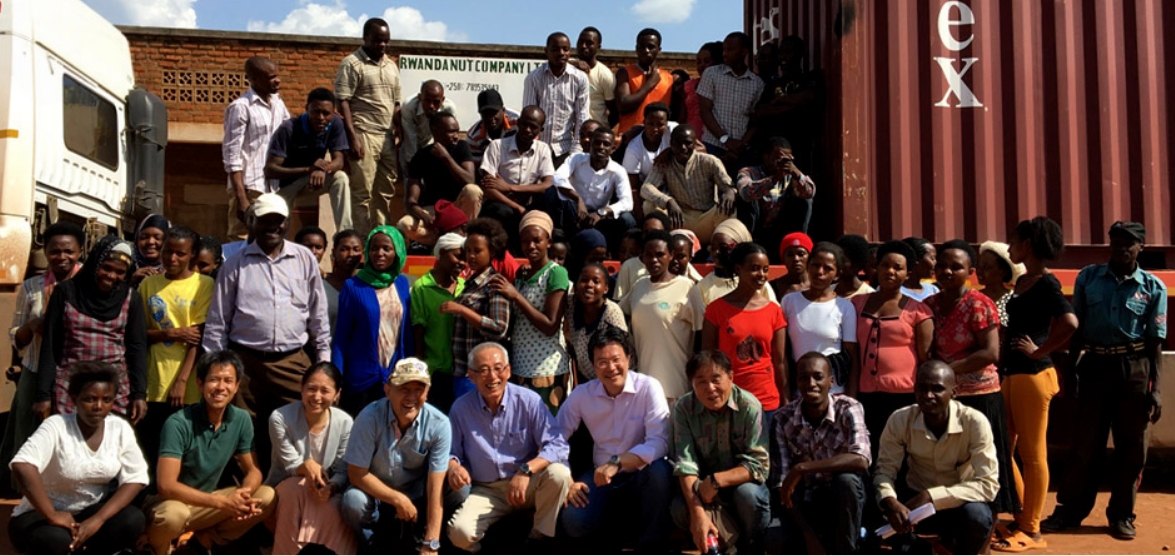
We met Yoshiyuki Sato, founder of Kenya Nuts, in 2012 and opened a macadamia plantation and processing business in Rwanda. As of 2023, the harvesting of macadamia nuts from the company’s own plantations in Rwanda (about 200 ha) is in full swing and the business is on track. In the same year, the company took over a 1,760 ha plantation adjacent to the Ngorongoro Nature Reserve in Tanzania and opened a new business as a second plantation.

While operating our plantations in Africa, we began to think that through our business, we would like to weave and introduce the stories of all the people involved, including our customers.

  • Employees and their local communities working together in various processes, including farm operations, cultivation and processing.
  • Many business partners who distribute and sell these products.
  • And the many customers who buy and enjoy our products.

People from different regions, cultures and environments with different ways of living and thinking. Even within the same single product, there are different stories behind it that cannot be standardised. The lives and thoughts of these people are connected and spun together through this single product.

We want to create a lot of happiness and wellbeing by spinning each and every ‘Stories’ of all the people involved in this business.

It is with this in mind that we strive to be a part of this business day in and day out.

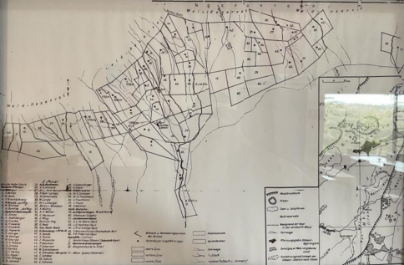
1920s Settler Map
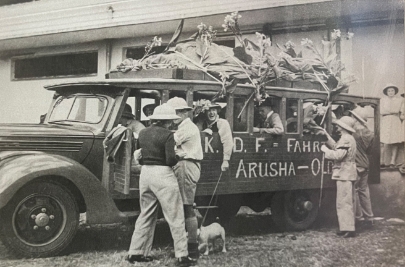
Public Bus Service
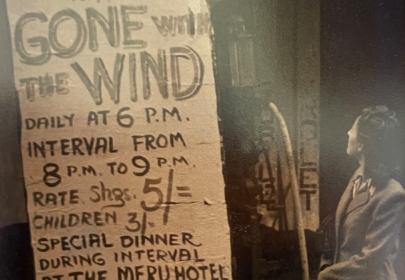
Movie Theater Screening (photo is “Gone with the Wind”)

History of Ngorongoro Conservation Area, Tanzania.

I would like to then introduce the history of the farm. Tanzania was formerly known as ‘East Tanganyika’ and became a German colony from 1885 as German East Tanganyika. It was during this German colonial period that coffee production really took off in Tanzania.

And during World War I (1914-1918), the neighbouring British Kenya and German East Tanganyika fought each other’s garrisoned colonial forces. After the defeat of Germany at home, the Paris Peace Treaty (1919) ceded East Tanganyika (now Tanzania) to the United Kingdom.

In the 1920s, Germany’s home country was in a major recession with hyperinflation, and a large number of German settlers remained in Tanzania. And it was during this period that around 60 German households settled in the area adjacent to the Ngorongoro Conservation Area, fully developing coffee plantations (Photo 1). Few locals lived in the area at the time and it was a day’s drive from the nearby town of Arusha (still a three-hour drive). Farms were cultivated there and towns/communities were built (Photos 2 and 3).

1920s Settler Map
Public Bus Service
Movie Theater Screening (photo is “Gone with the Wind”)

During World War II (1939-1945), German men in the area were interned in camps, but women and children were spared and kept their farms.

After World War II, independence movements grew in the African colonies, and Tanzania gained independence in 1961. In the early years, the new government adopted socialist policies, lands were nationalized, many plantations were seized and there was great disruption. However, the Ngorongoro region was spared nationalisation because it was in a rural area with almost no existing inhabitants.

Today, after many changes, the Ngorongoro region is home to about 20 large farms that have been consolidated and are still in existence. Each plantation has been passed down from one generation to the next, making it one of the most important coffee-growing regions in the country.

In view of this 100-year history, we feel privileged to be able to operate a vast farm of approximately 1,760 ha. Our farm is what it is today, thanks to the wishes of many people over the past 100 years. And we will also weave our way into ‘Stories’ for the next generation.

VISIT US

Introducing Ngorongoro Farm Tour

Vision/Mission/Value

We base our products and services on scientific evidence and technical achievements. As craftsmen, we take pride in our work, being kind to the earth, environment and society, Pursuing the highest quality, ‘trusting’ people and organisations and contributing to the development of the region.

In all our processing of products and services, from production to consumption, Communication with a smile that positively influences our stakeholders and we focus on building strong, trusting and empathetic ‘bonds’ through a sense of connection.

We face up to difficulties and uncertainties and ‘try’ new challenges in order to realize our dreams and goals. By providing the value of exciting experiences, we aim to grow society and the world by creating opportunities for inspiration and learning.

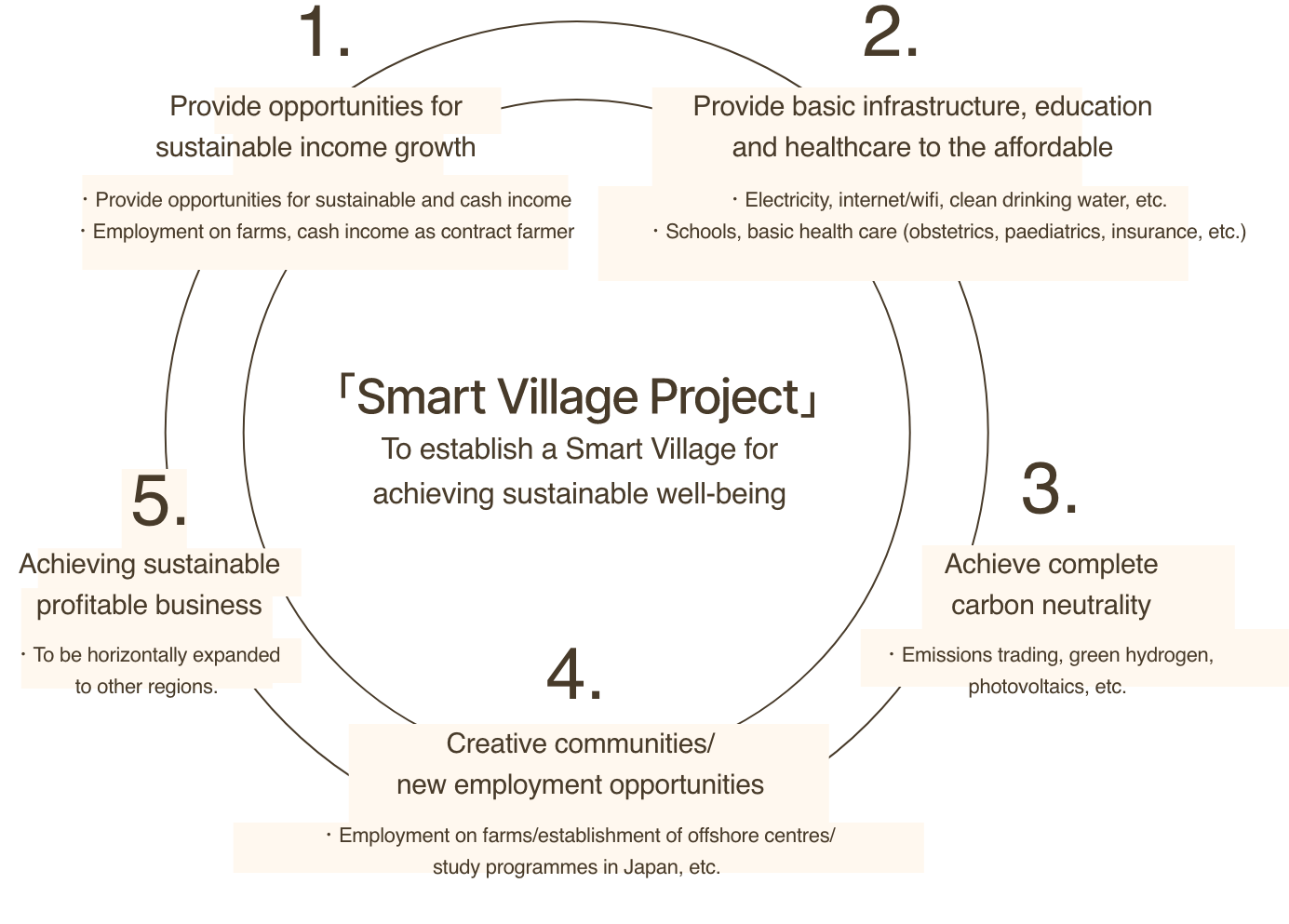
Contributing to society and creating wellbeing local communities Smart Village Project

As of 2023, 296 regular employees and 300 seasonal workers are employed on our farms.

A total of nearly 1,000 jobs are envisaged for further expansion. This would employ nearly a majority of the adults in the neighbouring villages, making community fostering in conjunction with the local community extremely important.
This would employ nearly a majority of the adults in the neighbouring villages, making community fostering in conjunction with the local community extremely important.
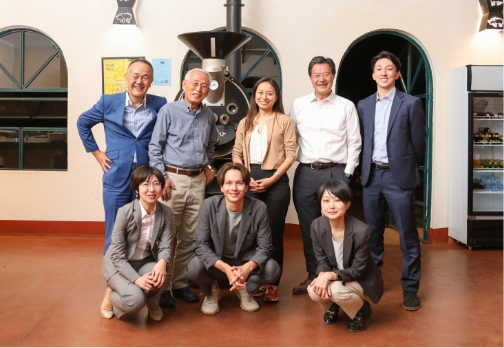
Our Staff

Susumu TSUBAKI
Susumu TSUBAKI
OSTI Director / Rwanda Nut Company Director / AAIC Group Representative Partner and Founder
Partner, Boston Consulting Group, and representative director of a publicly listed company; founded the current AAIC Group in 2008. More than 10 years of investment experience in Africa / invested in more than 50 companies in total (as of 2023 years); co-founded OSTI in 2013 and became a director.
Hideya KOMORI
Hideya KOMORI
Director, OSTI / Director, Rwanda Nut Company
After working for several foreign investment banks, he became involved in African operations before co-founding OSTI in 2013, where he became a director.
Yoshiyuki SATO
Yoshiyuki SATO
Director, OSTI / Chairman, Rwanda Nut Company
Studied at the University of Ghana in 1962 and has been operating in Africa since then; founded the Kenya Nut Company in 1975 and grew it into the largest food company in Kenya; co-founded OSTI in 2013 and became Director; co-founded the Kenya Nut Company in 2011 and became Director of OSTI in 2012. 61 years in Africa (as of 2023).
Hiroshi SUZUKI
Hiroshi SUZUKI
OSTI Director.
Former HOYA representative executive officer and chief executive officer (CEO), who joined HOYA and served as president of the board of directors of HOYA’s Singapore and US affiliates before being appointed representative executive officer (CEO) in 2003. He has held top management positions for more than 21 years.
Momoko HARADA
Momoko HARADA
Rwanda Nut Company. managing director/CEO, TANJA director
After working for Recruit and JBIC, he joined Rwanda Nut Company in 2013. Since then, he has led the business as CEO. 10 years in Africa (as of 2023).
Yuga KASAI
Yuga KASAI
Rwanda Nut Company CFO
Africa’s only qualified Japanese chartered accountant. Widely active throughout Africa. Seven years in Africa (as of 2023).
Masaki OZAWA
Masaki OZAWA
Rwanda Nut Company COO
She was in charge of overseas sales for a major Japanese machine tool manufacturer. Subsequently joined Rwanda Nut Company, current position.
Name
Name
Positon
Profile text
Profile text
Name
Name
Positon
Profile text
Profile text
Tatsuya SHIRATORI
Tatsuya SHIRATORI
OSTI Sales and Marketing Manager
After working in PR sales and sales planning at Recruit, worked in consultancy/business development at AAIC, focusing on overseas expansion projects.
Tomoko OGO
Tomoko OGO
OSTI/AAIC Manager of Communications and Investor Relations Strategy
After working in corporate sales and IT division at a megabank, she was sent to Rwanda as a Japan Overseas Cooperation Volunteer (JOCV). After returning to Japan, she worked for JICA on private-sector cooperation projects before assuming her current position.
Satomi FUJISHIMA
Satomi FUJISHIMA
Manager, OSTI Japan
She worked for six years as a primary school teacher at the Chiba Prefectural Board of Education. Later, she worked in economic affairs at the China and Mongolia Division of the Ministry of Foreign Affairs.
Name
Name
Position
Profile text
Profile text
Name
Name
Name
Name
Rwanda Nuts For approximately 200 people
TANJA296 permanent employees + approximately 300 seasonal workers.

Our Companies

組織図